


Introduction
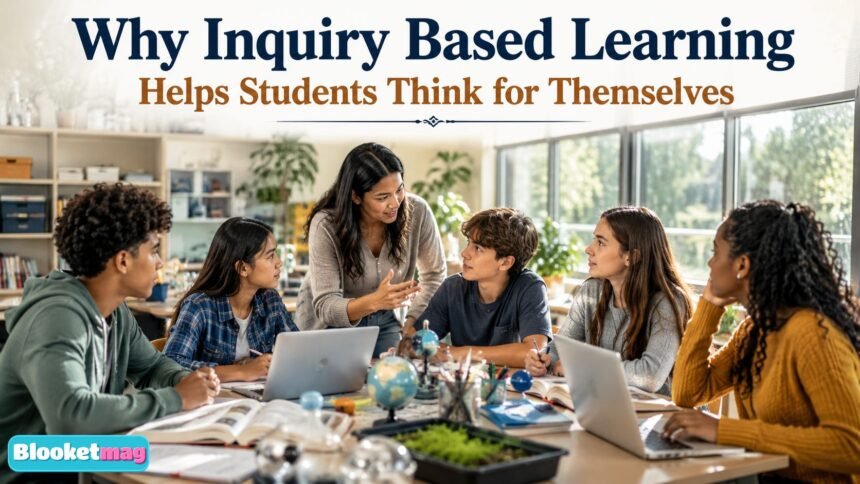
Inquiry based learning is an educational approach that encourages students to ask questions, explore ideas, investigate evidence, and discover answers through active participation. Instead of simply memorizing facts from textbooks, learners become curious investigators who build knowledge through observation, discussion, research, and reflection.
- Introduction
- What Is Inquiry Based Learning?
- How Inquiry Based Learning Works
- Why Independent Thinking Matters
- How Inquiry Based Learning Encourages Critical Thinking
- Students Learn to Ask Better Questions
- Research Becomes Meaningful
- Confidence Grows Through Discovery
- Benefits of Inquiry Based Learning
- Inquiry Based Learning Across Different Ages
- Real Classroom Examples
- The Teacher’s Role
- Challenges of Inquiry Based Learning
- Practical Ways to Use Inquiry Based Learning
- Common Misunderstandings
- Inquiry Based Learning and Future Skills
- SSM Smart Square Login: Complete Guide for Easy Access in 2026
- Frequently Asked Questions
- 1. What is inquiry based learning?
- 2. Why is inquiry based learning important for students?
- 3. Can inquiry based learning be used in every subject?
- 4. What is the teacher’s role in inquiry based learning?
- 5. What are the main benefits of inquiry based learning?
- Conclusion
Education has changed significantly over the past few decades. Today’s students need more than the ability to remember information for exams. They must learn how to analyze information, solve problems, communicate clearly, and make thoughtful decisions. These skills are becoming increasingly valuable in schools, workplaces, and everyday life.
Inquiry based learning supports these goals by placing curiosity at the center of education. It encourages students to think independently rather than waiting for someone else to provide every answer. As students learn to ask meaningful questions, evaluate evidence, and explain their reasoning, they become more confident learners who are prepared for lifelong learning.
This article explains what inquiry based learning is, how it works, why it helps students think for themselves, and how teachers and parents can support this powerful learning approach.
| Label | Information |
|---|---|
| Topic | Inquiry Based Learning |
| Type | Student-centered learning approach |
| Main Purpose | Develop independent thinking |
| Focus | Curiosity and exploration |
| Learning Style | Active and hands-on |
| Teacher’s Role | Guide and facilitator |
| Student’s Role | Ask questions and investigate |
| Key Skills | Critical thinking and problem-solving |
| Common Activities | Research, discussion, and projects |
| Suitable For | All age groups and subjects |
| Main Benefits | Better engagement, confidence, and deeper understanding |
| Long-Term Value | Supports lifelong learning and informed decision-making |
What Is Inquiry Based Learning?
Inquiry based learning is a teaching method where students actively investigate questions, problems, or topics instead of receiving information through direct instruction alone. Learning begins with curiosity. Students explore ideas, collect information, examine evidence, and develop their own understanding with guidance from their teacher.
Rather than focusing only on correct answers, inquiry based learning values the process of learning. Students are encouraged to think deeply, ask follow-up questions, test ideas, and reflect on what they discover.
This approach is supported by educational research showing that students learn more effectively when they actively participate in building knowledge instead of passively receiving information. It also aligns with modern educational frameworks that emphasize critical thinking, collaboration, creativity, and communication.
How Inquiry Based Learning Works
Inquiry based learning usually starts with a meaningful question. Instead of beginning a lesson by presenting facts, teachers introduce a topic that encourages curiosity.
Students may ask questions such as:
- Why do some plants grow better than others?
- How does climate affect different communities?
- Why did a historical event happen?
- What makes a successful business?
These questions lead students into research, observation, discussion, experimentation, and reflection.
Throughout the learning process, teachers guide students by asking additional questions, providing useful resources, and encouraging deeper thinking. Students gradually organize their findings, compare different viewpoints, and develop evidence-based conclusions.
This process transforms learning from simply remembering information into understanding concepts at a much deeper level.
Why Independent Thinking Matters
Independent thinking is one of the most valuable skills students can develop. In today’s world, information is available almost everywhere. The real challenge is learning how to evaluate that information carefully and make thoughtful decisions.
Students who think independently become more confident in solving problems. They learn to examine situations from different perspectives instead of accepting every statement without question.
Independent thinking also supports responsible decision-making. Whether students are completing school assignments, choosing future careers, or solving everyday challenges, the ability to think carefully helps them make informed choices.
Inquiry based learning strengthens these habits because students regularly practice asking questions, gathering evidence, and forming their own conclusions.
How Inquiry Based Learning Encourages Critical Thinking

Critical thinking involves analyzing information objectively before reaching a conclusion. Inquiry based learning naturally develops this ability because students are constantly examining ideas instead of memorizing facts.
When students investigate a topic, they compare different sources, identify reliable information, recognize bias, and consider alternative explanations. They begin to understand that many questions have complex answers rather than simple solutions.
As students defend their ideas using evidence, they become more confident in explaining their reasoning. They also learn to respect different viewpoints while evaluating which arguments are supported by facts.
These experiences build stronger analytical skills that remain useful throughout education and professional life.
Students Learn to Ask Better Questions
One of the greatest strengths of inquiry based learning is teaching students how to ask meaningful questions.
Good questions encourage exploration rather than simple yes-or-no answers. Instead of asking, “What happened?” students begin asking, “Why did it happen?” or “What evidence supports this conclusion?”
Asking thoughtful questions leads to deeper understanding because students move beyond surface-level information. They become curious learners who actively seek knowledge rather than waiting for answers.
This curiosity creates stronger motivation and greater engagement in learning.
Research Becomes Meaningful
Research is much more than finding information online. Effective research requires evaluating sources, comparing evidence, organizing ideas, and identifying reliable information.
Inquiry based learning gives students opportunities to practice these skills regularly.
Students learn how to distinguish between trustworthy sources and unsupported claims. They recognize the importance of evidence when forming opinions and understand why reliable information matters.
These research skills are increasingly important in a world where information spreads rapidly through digital media.
Confidence Grows Through Discovery
Students often gain confidence when they discover answers through their own effort.
Instead of relying entirely on teacher explanations, learners experience the satisfaction of solving problems independently. Each successful investigation reinforces the belief that they are capable of understanding difficult concepts.
Confidence grows gradually as students participate in discussions, present findings, answer questions, and explain their thinking.
This increased confidence often leads to greater classroom participation and stronger academic performance.
Benefits of Inquiry Based Learning
Inquiry based learning offers numerous educational benefits that extend beyond academic achievement.
One important benefit is increased student engagement. Learners become active participants instead of passive listeners. Because they investigate topics that encourage curiosity, they often remain interested for longer periods.
Another advantage is improved knowledge retention. Students generally remember concepts more effectively when they discover ideas through investigation rather than memorization.
Communication skills also improve because inquiry based learning encourages discussion, presentations, teamwork, and reflection. Students learn how to explain ideas clearly while listening respectfully to others.
Collaboration becomes another valuable outcome. Many inquiry activities involve group investigations where students share responsibilities, exchange ideas, and solve problems together.
Perhaps most importantly, inquiry based learning develops lifelong learning habits. Students learn that education does not end after graduation. Curiosity continues throughout life.
Inquiry Based Learning Across Different Ages
Inquiry based learning can be adapted for learners of all ages.
Young children naturally explore the world through observation and play. Teachers can encourage simple investigations using everyday objects, stories, and outdoor activities.
Elementary school students begin asking more detailed questions and conducting guided investigations. Teachers help them organize ideas while encouraging independent thinking.
Middle and high school students become capable of conducting more advanced research projects. They analyze evidence, debate ideas, and develop well-supported conclusions.
In colleges and universities, inquiry becomes even more sophisticated. Students complete research projects, investigate complex problems, and contribute original ideas within their fields of study.
Although the activities change with age, curiosity remains the foundation throughout every stage of learning.
Real Classroom Examples
Inquiry based learning appears in many different subjects.
In science, students may investigate how sunlight affects plant growth instead of simply reading about photosynthesis.
In history, learners examine historical documents to understand why important events occurred rather than memorizing dates alone.
In mathematics, students explore multiple strategies for solving complex problems instead of following a single formula.
In language arts, students analyze characters, themes, and author intentions through discussion and interpretation.
Geography lessons often encourage students to investigate environmental changes, population growth, or cultural diversity using maps and research.
Even art and music classes benefit from inquiry as students explore creative techniques, artistic movements, and cultural influences.
The Teacher’s Role
Although inquiry based learning emphasizes student participation, teachers remain essential throughout the learning process.
Teachers design meaningful learning experiences that encourage exploration while maintaining clear educational goals.
Rather than providing immediate answers, teachers ask guiding questions that help students think more deeply.
They also select reliable learning resources, encourage respectful discussions, monitor progress, and provide constructive feedback.
Effective teachers know when to step back and allow students to investigate independently, while also recognizing when additional guidance is necessary.
This balance creates a supportive classroom environment where curiosity can flourish.
Challenges of Inquiry Based Learning
Like every teaching approach, inquiry based learning has challenges.
Planning inquiry activities often requires additional preparation. Teachers must carefully design lessons that encourage investigation while meeting curriculum requirements.
Time can also become a challenge because meaningful investigations often take longer than traditional lectures.
Students may initially struggle if they are accustomed to receiving direct answers. Developing independent thinking requires patience and consistent practice.
Assessment can sometimes be more complex because teachers evaluate not only final answers but also research processes, collaboration, reasoning, and reflection.
Limited classroom resources may create additional difficulties for certain investigations.
Despite these challenges, careful planning and ongoing support allow schools to successfully implement inquiry based learning.
Practical Ways to Use Inquiry Based Learning
Teachers do not need to redesign every lesson immediately. Small changes can gradually introduce inquiry into everyday teaching.
Beginning lessons with open-ended questions encourages curiosity from the start.
Providing opportunities for discussion allows students to explore different viewpoints before reaching conclusions.
Real-world examples make learning more meaningful because students understand how classroom knowledge connects to everyday life.
Technology can support inquiry through digital libraries, educational videos, scientific databases, and interactive learning platforms.
Reflection activities at the end of each lesson help students consider what they learned, what surprised them, and what questions remain unanswered.
These simple practices gradually strengthen independent thinking.
Common Misunderstandings
Some people believe inquiry based learning means students receive no instruction from teachers. This is incorrect.
Teachers play an active role by providing guidance, structure, resources, and feedback throughout the learning process.
Another misconception is that inquiry based learning only works in science classrooms. In reality, it can be successfully applied across mathematics, history, literature, geography, arts, business studies, and many other subjects.
Some also assume inquiry based learning reduces academic standards. Research suggests the opposite. When carefully planned, inquiry activities help students develop deeper understanding while meeting curriculum objectives.
Inquiry based learning is not about replacing traditional teaching entirely. Instead, it combines direct instruction with meaningful investigation to create balanced learning experiences.
Inquiry Based Learning and Future Skills
The modern workplace values employees who can think critically, solve problems, communicate effectively, and adapt to changing situations.
Inquiry based learning develops these qualities from an early age.
Students learn how to analyze unfamiliar situations, collaborate with others, evaluate evidence, and make informed decisions. These abilities remain valuable regardless of career choice.
As technology continues to change how people work and learn, the ability to ask thoughtful questions and continue learning independently becomes increasingly important.
Inquiry based learning prepares students not only for examinations but also for lifelong success.
SSM Smart Square Login: Complete Guide for Easy Access in 2026
Frequently Asked Questions
1. What is inquiry based learning?
Inquiry based learning is a teaching approach where students learn by asking questions, exploring ideas, conducting research, and finding answers through investigation. It encourages active participation instead of passive memorization.
2. Why is inquiry based learning important for students?
Inquiry based learning helps students develop critical thinking, problem-solving, and decision-making skills. It also builds confidence by encouraging them to think independently and support their ideas with evidence.
3. Can inquiry based learning be used in every subject?
Yes. Inquiry based learning can be applied to subjects such as science, mathematics, history, language arts, social studies, and even creative arts. Teachers can adapt the approach to suit different learning objectives.
4. What is the teacher’s role in inquiry based learning?
The teacher acts as a guide and facilitator rather than simply delivering information. They encourage curiosity, provide learning resources, ask thoughtful questions, and support students throughout the learning process.
5. What are the main benefits of inquiry based learning?
The main benefits include improved critical thinking, stronger research skills, better collaboration, increased classroom engagement, greater confidence, and a deeper understanding of concepts that supports lifelong learning.
Conclusion
Inquiry based learning is far more than a teaching strategy. It is an educational philosophy that encourages curiosity, independent thinking, critical analysis, and lifelong learning.
Instead of memorizing information without understanding it, students actively investigate meaningful questions, examine evidence, discuss ideas, and build knowledge through experience. This process strengthens confidence, improves communication, develops research skills, and encourages thoughtful decision-making.
Teachers continue to play an essential role by creating supportive environments where students feel comfortable exploring ideas and asking questions. Parents can also encourage inquiry by supporting curiosity at home through conversations, reading, exploration, and everyday problem-solving.
As education continues to evolve, inquiry based learning offers a practical and effective way to prepare students for a future where critical thinking, adaptability, and continuous learning are more valuable than ever before. By helping students think for themselves, this approach equips them with skills that extend far beyond the classroom and remain useful throughout their lives.