

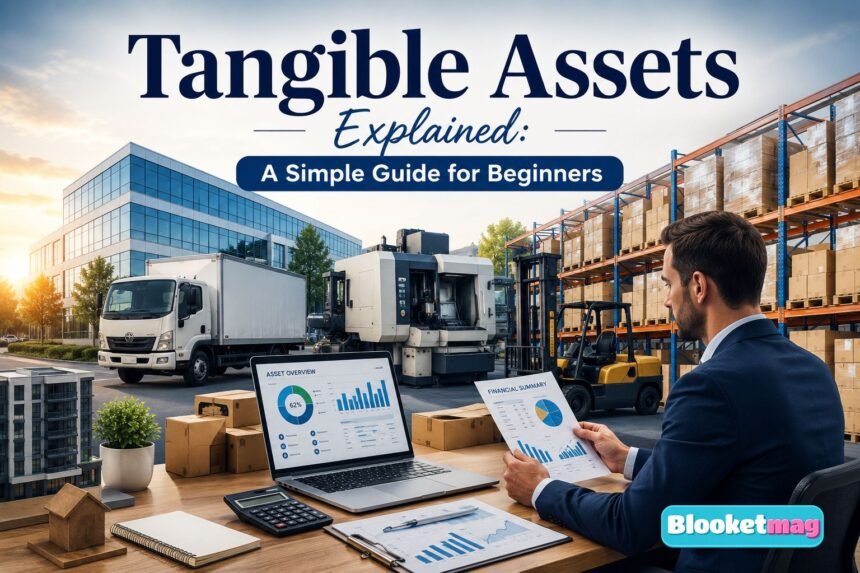
Every business owns resources that help it operate, earn revenue, and build value. Some of these resources can be physically seen and touched, such as buildings, vehicles, equipment, furniture, and inventory. These resources are known as tangible assets.
- What Are Tangible Assets?
- Main Characteristics
- Types of Tangible Assets
- Current Tangible Assets
- Fixed Tangible Assets
- Everyday Examples
- Why Tangible Assets Matter
- Tangible and Intangible Assets
- How Value Is Measured
- Depreciation
- Book and Market Value
- Tangible Assets on the Balance Sheet
- Business Advantages
- Common Limitations
- Effective Asset Management
- Common Valuation Mistakes
- A Simple Example
- 25 Cute Drawing Ideas to Spark Your Creativity Today
- Frequently Asked Questions
- What are tangible assets?
- What is the difference between tangible and intangible assets?
- Is cash considered a tangible asset?
- Do all tangible assets depreciate?
- Why are tangible assets important for businesses?
- Final Thoughts
Understanding tangible assets is important for business owners, investors, employees, and anyone learning the basics of accounting. They appear on company balance sheets, affect business valuations, support loan applications, and influence everyday operating decisions.
However, owning a physical item does not automatically make it a business asset. The item must provide an economic benefit, have a measurable value, and be controlled by the business. A delivery vehicle used by a company, for example, is a tangible asset because it supports business activities and helps generate income.
This beginner-friendly guide explains what tangible assets are, how they are classified, why they matter, how their value changes, and how businesses manage them.
| Label | Information |
|---|---|
| Topic | Tangible Assets |
| Category | Accounting & Finance |
| Definition | Physical assets with measurable value |
| Main Purpose | Support business operations and create value |
| Common Examples | Land, buildings, machinery, vehicles, inventory |
| Asset Types | Current assets and fixed assets |
| Physical Form | Can be seen and touched |
| Value Measurement | Cost, book value, market value |
| Depreciation | Most assets lose value over time, except most land |
| Business Importance | Supports production, financing, and growth |
| Financial Statement | Recorded on the balance sheet |
| Best For | Business owners, investors, students, and finance learners |
What Are Tangible Assets?
Tangible assets are physical resources that have measurable financial value. They can usually be seen, touched, moved, stored, used, or sold.
Examples include land, buildings, machinery, vehicles, computers, tools, office furniture, raw materials, and finished products. Businesses use these items to manufacture goods, provide services, store inventory, transport products, or manage daily operations.
A tangible asset normally has three important qualities:
- It has a physical form.
- It is controlled or owned by a person or business.
- It is expected to provide a future economic benefit.
Consider a bakery that owns ovens, display counters, delivery vans, tables, and ingredients. Each of these items has a physical presence and supports the bakery’s activities. The ovens help produce goods, the counters display products, the vans support deliveries, and the ingredients become items for sale.
Tangible assets are different from expenses. Buying a long-lasting machine may create an asset, while paying a monthly electricity bill is generally treated as an expense. The machine can support the business for several years, but the electricity payment relates mainly to the current accounting period.
Main Characteristics
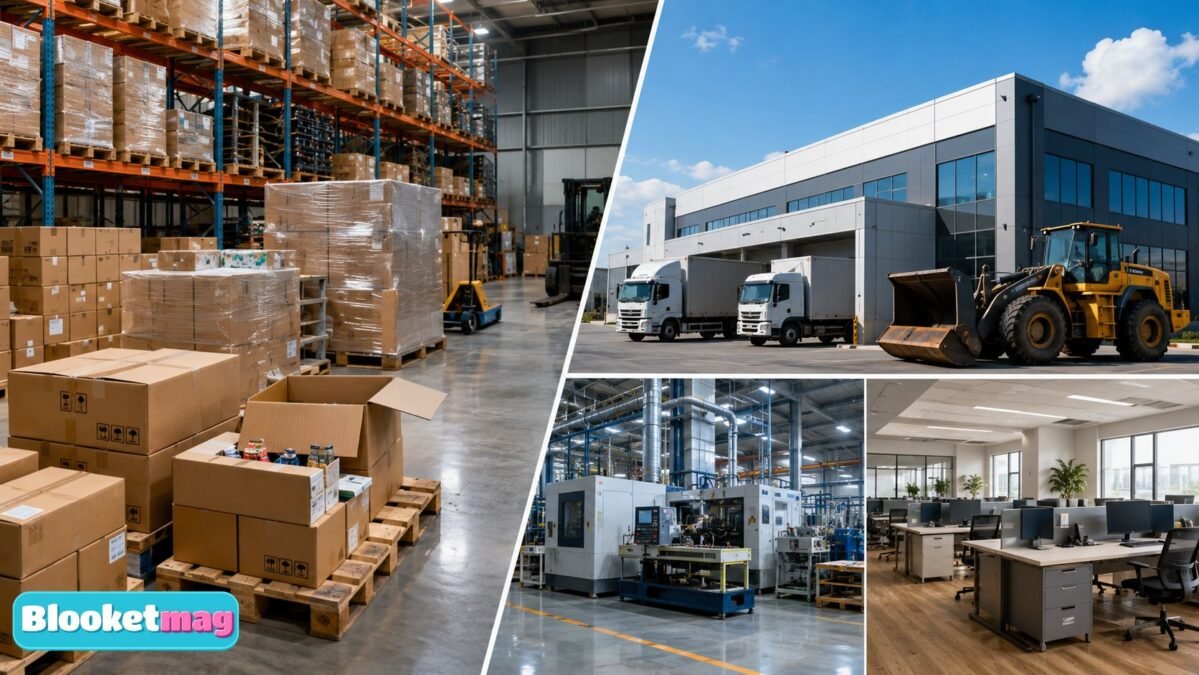
The most obvious characteristic of a tangible asset is its physical existence. Unlike a brand name, patent, copyright, or customer relationship, a tangible asset occupies physical space.
Most tangible assets also have a measurable cost. A business can normally identify how much it paid to purchase, transport, install, or prepare an asset for use. This allows the company to record the item in its accounting records.
Another important feature is useful life. Some tangible assets are expected to be used for only a short period, while others may support a business for decades.
Inventory may be purchased and sold within a few weeks. A computer may remain useful for several years. A commercial building may be used for much longer.
Tangible assets can also lose value because of wear, damage, age, changing technology, market conditions, or reduced demand. Proper valuation is therefore an important part of asset management.
Types of Tangible Assets
Tangible assets are commonly divided into current assets and non-current assets. The classification depends mainly on how quickly the business expects to use, sell, or convert the resource into cash.
Current tangible assets are generally expected to be used, sold, or converted during the normal operating cycle or within a relatively short period. Inventory is one of the clearest examples.
Non-current tangible assets are held for longer-term use. These include land, buildings, machinery, equipment, vehicles, and furniture. They are often called fixed assets or property, plant, and equipment.
The distinction is important because current and non-current assets serve different purposes. Current assets support short-term operations and liquidity, while fixed assets support long-term production and growth.
Current Tangible Assets
Inventory is usually the most significant current tangible asset for retailers, manufacturers, wholesalers, and many other businesses.
It may include:
- Raw materials waiting to be used
- Products still being manufactured
- Finished goods ready for sale
- Packaging and production supplies
- Merchandise purchased for resale
A clothing retailer’s inventory may include shirts, jackets, shoes, and accessories. A furniture manufacturer may hold timber, fabric, unfinished tables, and completed chairs.
Inventory is valuable because it can generate future revenue. However, it also creates risks. Products may become damaged, outdated, spoiled, or difficult to sell. Businesses must therefore monitor stock levels and avoid holding more inventory than they can reasonably use or sell.
Cash is also a current asset, although accounting discussions do not always group it with operational tangible property in the same way as inventory or equipment. It has physical forms, such as notes and coins, but most business cash today exists in bank accounts.
Accounts receivable, by comparison, are current assets but not physical assets. They represent money owed by customers rather than objects that can be touched.
This shows why current asset and tangible asset are not identical terms. Some current assets are tangible, while others are financial claims or rights.
Fixed Tangible Assets
Fixed tangible assets are physical resources that a business expects to use over more than one accounting period. They are not normally purchased for immediate resale.
Common examples include:
- Land
- Offices and factories
- Warehouses
- Machinery
- Production equipment
- Delivery vehicles
- Computers
- Office furniture
- Tools and fixtures
A construction company may own cranes, trucks, generators, and specialist tools. A hotel may own a building, beds, kitchen equipment, furniture, and laundry machines. A farming business may own land, tractors, irrigation systems, storage buildings, and harvesting equipment.
These assets allow the business to operate and earn revenue over time. Because they provide benefits across several periods, their cost is usually not treated as a single ordinary expense at the moment of purchase.
Instead, the cost of many fixed assets is allocated over their estimated useful lives through depreciation.
Everyday Examples
Individuals also own tangible assets, even when they do not use accounting terminology.
A house, car, bicycle, computer, mobile phone, jewellery collection, furniture, or valuable artwork may all be personal tangible assets. Their financial importance depends on their condition, ownership, market value, and ability to be sold.
Some personal belongings have little resale value, even if they were expensive when purchased. Others may retain or increase their value.
For example, an ordinary household appliance will generally lose value as it ages. A well-located property, rare collectible, or piece of valuable land may appreciate under favourable market conditions.
The fact that an item is physical does not guarantee that it will remain valuable. Demand, condition, scarcity, age, maintenance, and market trends all affect what someone may be willing to pay for it.
Why Tangible Assets Matter
Tangible assets are essential because they support the practical side of business activity.
A manufacturing company cannot produce goods without suitable machines, tools, and facilities. A transport company needs vehicles. A restaurant depends on kitchen equipment, tables, refrigeration, and furniture. A retailer needs inventory, shelving, storage space, and checkout equipment.
These assets can also increase the overall value of a company. A business that owns useful property and well-maintained equipment may appear financially stronger than one that relies entirely on rented or outdated resources.
Lenders frequently review tangible assets when assessing a loan application. Certain assets can be offered as collateral, giving the lender a legal claim over the property if the borrower fails to repay the debt.
Investors also examine tangible assets to understand how much physical infrastructure supports a company’s activities. However, they should not look only at the total value. Old, inefficient, heavily financed, or underused assets may not be a sign of financial strength.
Quality, condition, productivity, ownership, debt obligations, and future usefulness all matter.
Tangible and Intangible Assets
The main difference between tangible and intangible assets is physical form.
Tangible assets can be physically identified. Intangible assets represent valuable rights, knowledge, relationships, or competitive advantages that have no physical substance.
Examples of intangible assets include:
- Patents
- Copyrights
- Trademarks
- Licences
- Software rights
- Brand recognition
- Franchise agreements
A delivery truck is tangible because it is a physical object. A company trademark is intangible because its value comes from legal protection, recognition, and commercial use rather than physical existence.
Both types can be extremely valuable. A technology company may own relatively little physical property but possess valuable software, patents, data, and intellectual property. A manufacturing company may depend more heavily on factories, machines, warehouses, and inventory.
It is therefore misleading to assume that tangible assets are always more valuable than intangible assets. Their importance depends on the company’s industry, business model, financial position, and competitive advantages.
How Value Is Measured
A business usually begins by recording a tangible asset at its purchase cost. However, the total recorded cost may include more than the price shown on the supplier’s invoice.
Depending on the accounting rules and circumstances, the initial cost may include amounts directly required to bring the asset to the location and condition necessary for use.
For example, the recorded cost of a machine may include:
- Purchase price
- Delivery charges
- Installation expenses
- Testing costs
- Direct professional fees
- Site preparation costs
Routine operating costs and unnecessary expenses are not automatically added to the asset’s value. Businesses must distinguish between costs required to prepare the asset and costs connected with normal operations.
After recognition, the amount shown in the accounts may change because of depreciation, impairment, disposal, revaluation where permitted, or other adjustments.
Depreciation
Depreciation is the systematic allocation of a depreciable asset’s cost over its useful life. It recognises that many physical assets provide benefits across multiple periods and may wear out, become outdated, or lose productive capacity.
Suppose a company purchases equipment for $50,000 and expects to use it for five years. Recording the entire $50,000 as an ordinary expense in the first year could give a distorted picture because the equipment will help generate revenue over several years.
Depreciation spreads the depreciable amount across the periods receiving the benefit.
A basic straight-line calculation is:
Annual depreciation = Cost minus residual value, divided by useful life
If equipment costs $50,000, has an estimated residual value of $5,000, and has a useful life of five years, the annual straight-line depreciation would be $9,000.
The calculation would be:
$50,000 − $5,000 = $45,000
$45,000 ÷ 5 = $9,000 per year
Depreciation is an accounting allocation, not necessarily a direct measurement of the asset’s current selling price. An asset’s market value can rise or fall differently from its carrying amount.
Land is generally not depreciated when it is expected to have an unlimited useful life. Buildings located on the land are normally considered separately because they wear out and require replacement or major repair over time.
Book and Market Value
Book value and market value are related but different ideas.
The book value, often called the carrying amount, is the amount at which an asset is presented in the accounting records after relevant depreciation, impairment, and other adjustments.
For a simple depreciated asset, it may be calculated as:
Book value = Original recorded cost − Accumulated depreciation
Market value is the amount buyers may currently be willing to pay under existing market conditions.
A vehicle may have a book value of $12,000 but a market value of $10,000 or $15,000. Differences can arise because accounting estimates do not continuously follow every market price movement.
Fair value is another measurement concept. It generally reflects the price associated with selling an asset or transferring a liability in an orderly market transaction at the measurement date.
Beginners should avoid treating book value, market value, and fair value as interchangeable terms.
Tangible Assets on the Balance Sheet
The balance sheet presents a company’s financial position at a particular date. It normally shows assets, liabilities, and owners’ or shareholders’ equity.
Current tangible assets such as inventory are usually presented within current assets. Long-term physical assets are generally presented separately as property, plant, and equipment or under a similar heading.
Financial statements may show the gross cost of fixed assets, accumulated depreciation, and the resulting carrying amount. Additional notes can explain depreciation methods, useful lives, asset categories, purchases, disposals, and impairment losses.
Investors review this information to understand how heavily the business depends on physical resources and how much investment may be required to maintain or replace them.
A large asset balance does not automatically mean the company is highly profitable. Assets must be used efficiently. Idle factories, unused vehicles, excessive inventory, and outdated machinery can consume cash without producing adequate returns.
Business Advantages
Tangible assets offer several practical advantages.
First, they provide the physical capacity needed to operate. A business with suitable facilities and reliable equipment may serve customers more consistently.
Second, certain tangible assets can be sold. This may provide financial flexibility when a company needs cash, closes a location, upgrades equipment, or changes its strategy.
Third, assets such as property, machinery, and vehicles may support borrowing when lenders accept them as collateral.
Fourth, ownership can reduce dependence on landlords, leasing companies, or equipment providers. However, buying is not always better than renting. Ownership also creates maintenance, insurance, storage, financing, and replacement responsibilities.
Finally, well-selected assets can improve productivity. Modern equipment may reduce waste, improve quality, increase output, or lower operating costs.
Common Limitations
Tangible assets also create financial and operational risks.
Many lose value over time. Vehicles accumulate mileage, machinery wears out, computers become outdated, and inventory may become unsellable.
Physical assets also require maintenance. A cheap machine that breaks down frequently may cost more over its lifetime than a reliable machine with a higher purchase price.
Storage can become another expense. Inventory, equipment, spare parts, and vehicles need secure space. Businesses may pay for warehouses, security, climate control, inspections, and insurance.
Damage and theft are additional concerns. Fire, flooding, accidents, vandalism, and natural disasters can destroy valuable property. Insurance may reduce financial loss, but coverage limits and exclusions must be reviewed carefully.
Tangible assets can also be difficult to sell quickly. A specialised machine may be useful to only a small number of buyers. Its estimated value on paper may therefore be higher than the amount available in an urgent sale.
Effective Asset Management
Good asset management begins with accurate records.
Businesses should maintain an asset register showing essential information such as the asset’s description, identification number, location, purchase date, original cost, assigned department, useful life, depreciation method, condition, and disposal date.
Regular physical checks can confirm that assets still exist, remain in the recorded location, and are being used for business purposes.
Maintenance should be planned rather than delayed until equipment fails. Preventive servicing can extend useful life, improve safety, and reduce unexpected interruptions.
Insurance coverage should also be reviewed as assets are purchased, moved, upgraded, or sold. Underinsurance can create serious losses, while outdated policies may continue charging for property the business no longer owns.
Businesses should also compare repair and replacement costs. Continuing to repair an inefficient asset may eventually become more expensive than replacing it.
Common Valuation Mistakes
One common mistake is assuming that purchase price always equals current value. Most physical assets change in value after acquisition.
Another mistake is ignoring depreciation. A five-year-old vehicle should not normally remain recorded as though it were brand new.
Businesses may also overlook hidden ownership costs. Maintenance, insurance, fuel, storage, repairs, taxes, financing, and downtime can significantly change the true cost of an asset.
Inventory creates its own valuation risks. Damaged, expired, outdated, or slow-moving products may not be worth their original cost. Regular inventory reviews help identify stock that may require a write-down or disposal.
Misclassification is another problem. Treating an ordinary repair as a new asset, or recording a major asset improvement as a routine expense, can distort financial results.
Professional accounting advice is particularly valuable when transactions are large, unusual, or subject to complex reporting and tax rules.
A Simple Example
Imagine a small delivery company that owns the following:
- A warehouse
- Five delivery vans
- Office computers
- Desks and storage shelves
- Packaging supplies
- Goods waiting for delivery
The warehouse, vans, computers, desks, and shelves are long-term tangible assets used in operations. Packaging supplies and goods held for customers may be treated differently depending on their purpose and the company’s arrangements.
The company must record asset purchases, estimate useful lives, calculate depreciation where required, arrange maintenance, maintain insurance, and remove assets from its records when they are sold or disposed of.
If one van is damaged beyond repair, the company must update its records and account for any insurance proceeds or disposal amount. If it purchases a replacement van, that purchase creates a new asset with its own cost and useful life.
This example shows that managing tangible assets involves much more than simply owning physical property.
25 Cute Drawing Ideas to Spark Your Creativity Today
Frequently Asked Questions
What are tangible assets?
Tangible assets are physical items with measurable value. Common examples include land, buildings, machinery, vehicles, furniture, equipment, and inventory.
What is the difference between tangible and intangible assets?
Tangible assets have a physical form and can be seen or touched. Intangible assets have no physical form and include patents, trademarks, copyrights, software rights, and brand value.
Is cash considered a tangible asset?
Cash has a physical form when held as notes or coins. However, businesses usually classify it as a current financial asset rather than grouping it with operational tangible assets such as inventory or equipment.
Do all tangible assets depreciate?
No. Most machinery, vehicles, buildings, and equipment depreciate over their useful lives. Land is generally not depreciated because it normally has an indefinite useful life.
Why are tangible assets important for businesses?
Tangible assets help businesses produce goods, provide services, secure financing, and support daily operations. They may also have resale value and can sometimes be used as collateral for loans.
Final Thoughts
Tangible assets are physical resources with measurable value that support personal or business activities. They include inventory, land, buildings, vehicles, machinery, equipment, computers, tools, and furniture.
Some are held for short-term use or sale, while others support operations over many years. Their value may change because of depreciation, impairment, damage, market conditions, maintenance, and technological change.
For businesses, tangible assets can strengthen operating capacity, provide collateral, create resale value, and support long-term growth. At the same time, they introduce costs and risks related to maintenance, storage, insurance, replacement, and disposal.
The most important lesson is that the value of a tangible asset depends not only on what it cost, but also on its condition, usefulness, remaining life, market demand, and ability to contribute to future economic benefits.
By keeping accurate records and reviewing physical assets regularly, businesses can make better purchasing decisions, improve financial reporting, reduce avoidable losses, and use their resources more effectively.