

Intro
Online word games have a special quality that keeps people returning. They are easy to understand, mentally engaging, and suitable for both short breaks and longer playing sessions. Just Words Masque belongs to this familiar category, combining vocabulary knowledge with strategic tile placement.
- Intro
- What Is Just Words Masque?
- What the Name Means
- How the Game Works
- The Main Objective
- The Game Board
- Making a Legal Move
- Scoring Explained
- Why Players Enjoy It
- Single-Player and Competitive Play
- The Role of Vocabulary
- Strategy Matters
- Useful Beginner Tips
- Common Beginner Mistakes
- How to Improve Naturally
- Educational Value
- Playing Fairly
- Just Words and Similar Games
- Technical and Platform Differences
- Common Misunderstandings
- Is Just Words Masque Worth Playing?
- Best Text Twist 2 Untimed Strategies to Improve Your Game
- Frequently Asked Questions
- 1. What is Just Words Masque?
- 2. Is Just Words Masque free to play?
- 3. How can I improve my score in Just Words Masque?
- 4. Is Just Words Masque suitable for beginners?
- 5. Does playing Just Words Masque help improve vocabulary?
- Final Thoughts
The name often causes confusion among new players. Some people assume that “Masque” describes a game mode, a character, or a special type of puzzle. In reality, Masque Publishing is the company behind Just Words, while Just Words is the name of the game itself.
The basic idea is simple: players receive letter tiles and use them to form valid words on a board. Every letter has a point value, and the position of a word can increase the final score. Although the rules are approachable, winning consistently requires patience, vocabulary, planning, and careful use of the board.
This guide explains what Just Words Masque is, how it works, why people enjoy it, and how beginners can improve without making the experience unnecessarily complicated.
| Label | Information |
|---|---|
| Name | Just Words |
| Publisher | Masque Publishing |
| Game Type | Online word puzzle game |
| Genre | Crossword and vocabulary |
| Gameplay | Build words with letter tiles |
| Main Goal | Score more points than your opponent |
| Scoring | Based on letter values and bonus squares |
| Skill Level | Beginner to advanced |
| Key Skills | Vocabulary, spelling, and strategy |
| Play Modes | Single-player and multiplayer (platform dependent) |
| Best For | Word game lovers and casual gamers |
| Educational Value | Helps improve vocabulary and critical thinking |
What Is Just Words Masque?
Just Words Masque is an online tile-based word game developed by Masque Publishing. Players arrange letter tiles to create words and compete for the highest score. It follows a crossword-style board format in which newly played words must connect with letters already placed on the board.
The game is often compared with traditional word board games because it uses familiar elements such as letter values, connected words, bonus spaces, and turn-based play. However, it is presented as a digital game that can be played through supported online gaming platforms.
A typical game begins with a small collection of randomly selected letters. The player studies those tiles, forms a valid word, and places it on the board. After the move is accepted, replacement letters are provided, and the opponent takes a turn.
The objective is not simply to create the longest word. A short word placed on valuable bonus spaces can sometimes earn more points than a longer word placed in an ordinary area. This balance between language and strategy gives the game much of its appeal.
What the Name Means
The keyword just words masque is best understood as a combination of the game’s title and its publisher’s name.
“Just Words” identifies the word game. “Masque” refers to Masque Publishing, the developer associated with the title. It does not normally describe a mask, beauty treatment, or historical stage performance in this context.
This distinction matters because the word “masque” has several meanings in English. Historically, a masque was an elaborate form of court entertainment involving costumes, music, dancing, scenery, and performance. In modern beauty language, “masque” can also be another spelling for a facial or hair mask.
Neither definition explains this particular search term. When people search for Just Words Masque, they are usually trying to find information about the online game, its rules, its publisher, or where it can be played.
How the Game Works
The central task is to create valid words from the letters available on the player’s rack. The first word is placed in the central area of the board. Later words must connect to the existing arrangement.
Players normally take turns. During a turn, a player examines the available letters and looks for a legal place to build a word. The new word may extend an existing one, cross through one of its letters, or form several connected words at the same time.
Each tile carries a point value. Common letters are generally worth fewer points, while less frequently used letters can provide greater rewards. The score for a move is calculated from the letters played and any bonus spaces covered during that turn.
After a successful play, the used tiles are replaced when enough letters remain available. The board gradually becomes more crowded, making later moves more challenging. Players must then search for smaller gaps, useful prefixes, common endings, and opportunities to connect multiple words.
The game continues until its ending conditions are reached, such as the available tiles being exhausted or the players no longer making further plays.
The Main Objective
The main goal is to finish with a higher score than the opponent. Forming recognizable words is necessary, but vocabulary alone does not guarantee victory.
A strong player considers several questions before confirming a move:
Can this word reach a bonus space? Will it open an easy scoring opportunity for the opponent? Should a valuable letter be used now or saved? Can the same tiles produce a better word elsewhere? Will the move leave a balanced collection of letters for the next turn?
These decisions turn Just Words from a simple spelling activity into a strategic contest. The strongest move is often the one that combines immediate points with a useful position for future turns.
The Game Board
The board provides the structure for every match. It contains a grid of spaces where tiles can be placed. Some spaces are ordinary, while others apply scoring bonuses.
Certain bonus areas increase the value of an individual letter. Others multiply the value of the complete word. The exact visual appearance can vary depending on the platform or version, but the strategic purpose remains the same.
A valuable letter placed on a letter multiplier can produce a noticeable score increase. A complete word crossing a word multiplier may be even more rewarding. Skilled players therefore study the board before choosing where to play.
The board also becomes more restrictive as the game progresses. Open spaces disappear, and players must work around existing letter patterns. This is why flexible vocabulary becomes especially important in later turns.
Making a Legal Move
A legal move must follow the game’s placement and word-validation rules. Randomly placing letters is not enough.
The opening word must use the required central area. After that, each new play must connect with at least one tile already on the board. Tiles placed during a single turn must generally appear in one continuous horizontal or vertical line.
Every word created by the move must be accepted by the game’s dictionary. This includes the main word and any smaller words formed where newly placed tiles touch existing letters.
For example, a player might place one word vertically while accidentally creating two short horizontal words. If either short word is invalid, the entire move may be rejected.
Before submitting a play, it is helpful to inspect every point where the new tiles meet the existing board.
Scoring Explained
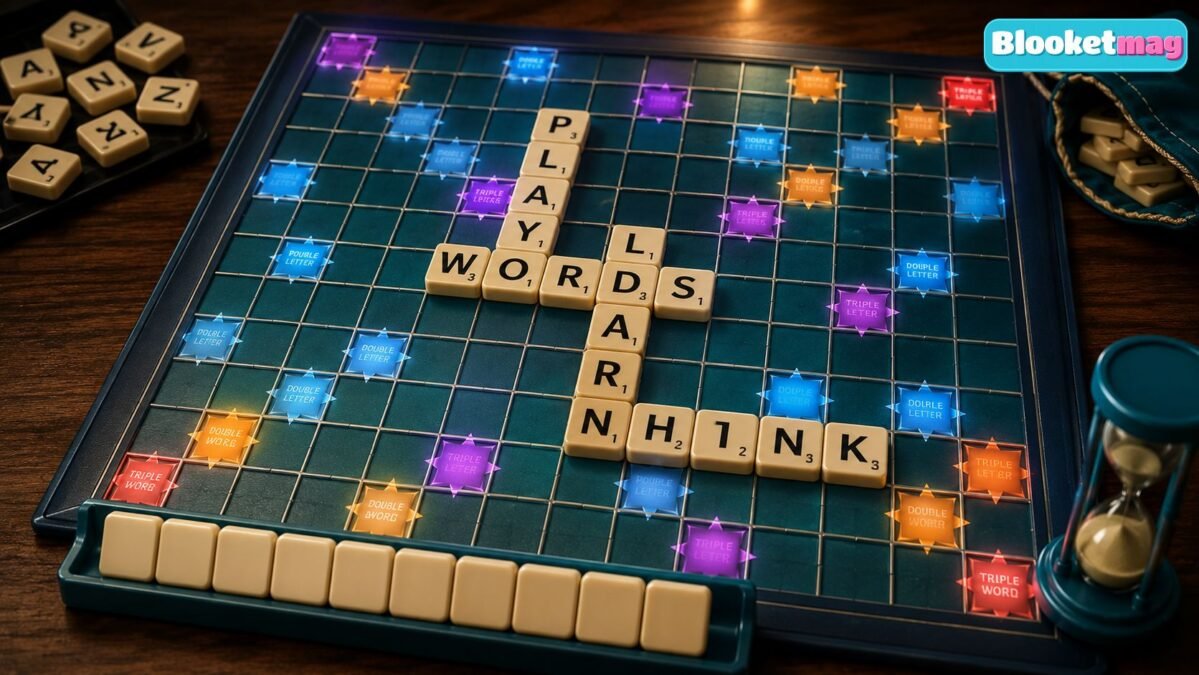
Scoring is based on the value of the letters used in a play. The values are added together, and any active board multipliers are then applied.
Suppose a player forms a word using several ordinary letters and one high-value letter. If the high-value tile lands on a letter bonus, only that tile’s value is multiplied. If the word covers a word bonus, the total value of the word is multiplied.
A single move can also form more than one word. When that happens, each valid word may contribute to the score. This creates some of the most valuable opportunities in the game.
Experienced players do not judge a move by length alone. They consider the total points produced by every letter, multiplier, and connected word. A carefully placed three-letter word can outperform an impressive seven-letter word.
Why Players Enjoy It
One reason for the game’s continued appeal is its accessibility. The basic concept can be understood quickly, even by someone who has never played an online word game.
At the same time, the game has enough depth to remain interesting. Every rack of letters creates a different problem, and every opponent changes the flow of the board. No two matches develop in exactly the same way.
The game also allows players to use several abilities at once. They recall vocabulary, recognize patterns, calculate points, manage limited resources, and predict possible responses.
There is also satisfaction in discovering a word from an awkward group of letters. A rack that first looks useless may contain an effective move after the letters are rearranged. That moment of recognition is a major part of the enjoyment.
Single-Player and Competitive Play
Depending on the platform and available version, Just Words may offer computer-based play, multiplayer competition, or both.
Playing against a computer is useful for learning the interface and becoming comfortable with the rules. It gives beginners space to experiment with tile placement, scoring areas, and unfamiliar letter combinations.
Competitive play introduces a different challenge. A human opponent may protect valuable spaces, create traps, or use unexpected vocabulary. Players must respond not only to the board but also to the other person’s style.
Some opponents focus on long words. Others prefer short, efficient plays that limit access to bonus areas. Adapting to those differences can be just as important as knowing more words.
The Role of Vocabulary
A broad vocabulary is clearly helpful, but players do not need to know extremely unusual words to enjoy the game. Familiar words can produce strong results when placed intelligently.
Short words are particularly important. They fit into crowded areas and can connect with several existing tiles. Knowing a reliable collection of common two-letter and three-letter words gives players more options when space becomes limited.
Prefixes and suffixes are valuable as well. A player may extend an existing word by adding a beginning or ending. Recognizing endings such as “-ed,” “-er,” “-ing,” or “-s” can reveal simple scoring opportunities.
Vocabulary improves naturally through repeated play. Players begin to notice recurring combinations and remember words that were previously unfamiliar. However, it is wise to check meanings rather than memorizing letter patterns without understanding them.
Strategy Matters
The highest-scoring available move is not always the best strategic choice. A large score may open a premium space that allows the opponent to respond with an even stronger word.
Good board management involves controlling access. Players should notice empty lines leading toward multipliers and avoid creating obvious openings unless the reward justifies the risk.
Rack balance is another important consideration. Keeping too many vowels can make it difficult to form useful words. The same problem occurs when a rack contains mostly consonants. A balanced mixture usually offers greater flexibility.
Players should also be cautious with valuable letters. Saving a difficult tile for too long can become a burden, but playing it cheaply may waste its scoring potential. The right decision depends on the board, the remaining letters, and the stage of the match.
Useful Beginner Tips
Beginners often search only for the longest word they can create. A better approach is to search for the most productive move.
Start by rearranging the letters several times. Changing their order makes prefixes, endings, and familiar patterns easier to see.
Next, inspect every available bonus space. Consider whether a short word can reach one without exposing an equally valuable area to the opponent.
Look for ways to extend existing words. Adding one letter to a word already on the board may create a valid new form while allowing another word to cross it.
Try to retain a useful balance of vowels and consonants. A move that scores slightly fewer points may be worthwhile when it leaves a much stronger rack.
Finally, learn from rejected words and missed opportunities. Each match provides information that can improve the next one.
Common Beginner Mistakes
One common mistake is focusing entirely on word length. Long words can be rewarding, but position and multipliers often matter more.
Another mistake is ignoring the opponent’s next move. Opening a clear path to a word multiplier can change the match immediately.
Players may also hold difficult letters for too long. A high-value tile is useful only when it can eventually be played. Keeping it through many turns can reduce flexibility.
Failing to check crosswords is another frequent problem. A main word may be correct, but a smaller word created beside it may not be accepted.
Some players also exchange letters too quickly. Before giving up a turn, they should look for short words, extensions, and parallel placements that might not be obvious at first glance.
How to Improve Naturally
Consistent improvement comes from combining play with thoughtful review. After a match, consider which letters were difficult to use and which board openings were overlooked.
Learning short words provides one of the fastest improvements. They are easier to place and especially useful when the board becomes crowded.
Studying common letter combinations can also help. English words frequently use patterns such as “ch,” “sh,” “th,” “st,” and “tr.” Recognizing these combinations makes it easier to organize a mixed rack.
Players can also practice creating several possibilities before choosing a move. Instead of submitting the first acceptable word, compare its score, position, and effect on the remaining tiles.
Over time, this process becomes quicker. Players begin to recognize promising board locations almost immediately.
Educational Value
Just Words can support language practice because it encourages players to recall spelling, notice word structures, and experiment with letters.
It may help learners become more comfortable with prefixes, suffixes, plurals, and common spelling patterns. The repeated search for valid combinations can also strengthen word recognition.
However, a word game should be treated as a learning aid rather than a complete language course. It does not necessarily teach pronunciation, grammar, context, or precise meaning.
The greatest educational value comes when players look up unfamiliar accepted words and learn how they are used. This turns a successful move into a genuine vocabulary lesson.
Playing Fairly
Word-solving tools can remove much of the challenge from a competitive match. They may generate strong words instantly, but they also replace the thinking process that makes the game rewarding.
Fair play is especially important against real opponents. Both players should rely on their own vocabulary and reasoning unless they have agreed to different rules.
Using a dictionary after a game is different from using a solver during one. Post-game review helps a player learn, while live assistance can create an unfair advantage.
The most satisfying progress comes from noticing personal improvement: finding better placements, recalling more words, and making fewer strategic mistakes.
Just Words and Similar Games
Just Words shares features with several tile-based crossword games. Players form connected words, earn points from letter values, and use special spaces to improve their scores.
Its familiar structure makes it easy for fans of traditional word board games to understand. Nevertheless, players should not assume that every rule is identical across all titles. Tile quantities, dictionaries, interfaces, bonus layouts, and ending conditions can differ.
The best approach is to review the tutorial or instructions provided within the version being played. This prevents confusion and helps players understand the exact scoring system.
Technical and Platform Differences
The appearance and availability of Just Words can vary across gaming websites. Menus, advertisements, computer difficulty settings, multiplayer access, and control methods may not be identical everywhere.
Some versions may work smoothly with mouse controls, while others may also support typing or touchscreen placement. Account requirements can also differ by platform.
Players who encounter a loading problem should first refresh the page, check their browser, disable conflicting extensions, or try a supported device. Because online games depend on web technology and platform services, occasional technical differences are normal.
It is also sensible to use trusted gaming platforms and avoid downloading unknown files that claim to unlock special versions or advantages.
Common Misunderstandings
The largest misunderstanding concerns the word “Masque.” In this case, it identifies the publisher rather than a feature of the game.
Another misconception is that the game depends only on vocabulary. Language knowledge helps, but placement, timing, rack management, and defensive play are equally important.
Some beginners believe every turn requires a long word. In reality, short words are essential and can generate excellent scores.
Players may also assume that a word accepted in everyday conversation will always be recognized. Digital word games use specific dictionaries, so proper names, abbreviations, slang, and regional terms may be treated differently.
Is Just Words Masque Worth Playing?
Just Words is well suited to people who enjoy vocabulary challenges, turn-based competition, and thoughtful board games. It offers rules that are easy to grasp without becoming shallow.
A casual player can enjoy forming familiar words and watching the board develop. A more competitive player can study multipliers, control open spaces, and plan several turns ahead.
The game also works well for people who prefer a calmer challenge rather than fast action. Although some modes may include timing or competitive pressure, the central experience is based on observation and decision-making.
Its strongest quality is the balance between simplicity and strategy. New players can begin with basic words, while experienced players can continue refining their approach.
Best Text Twist 2 Untimed Strategies to Improve Your Game
Frequently Asked Questions
1. What is Just Words Masque?
Just Words Masque is an online word-building game developed by Masque Publishing. Players create words from letter tiles on a game board and earn points based on letter values and bonus spaces.
2. Is Just Words Masque free to play?
Many platforms offer Just Words Masque as a free online game, although availability and features may vary depending on the website or gaming service hosting it.
3. How can I improve my score in Just Words Masque?
You can improve by learning common short words, using bonus tiles wisely, balancing vowels and consonants, and planning your moves instead of simply creating the longest possible word.
4. Is Just Words Masque suitable for beginners?
Yes. The game has simple rules that are easy to understand, making it suitable for beginners while still offering enough strategy to keep experienced players engaged.
5. Does playing Just Words Masque help improve vocabulary?
Yes. Regularly playing Just Words Masque can strengthen your vocabulary, spelling skills, word recognition, and strategic thinking by encouraging you to discover and use new words in different situations.
Final Thoughts
Just Words Masque is a digital word game from Masque Publishing in which players use letter tiles to build connected words and outscore an opponent. The term is not the name of a mysterious language concept or historical performance. It simply joins the title of the game with the name of its developer.
The rules are straightforward, but strong play involves much more than spelling. Players must evaluate bonus spaces, protect valuable areas, balance their tiles, recognize short words, and consider what the opponent might do next.
Beginners should focus on legal placement, common words, and board awareness before worrying about advanced tactics. With regular practice, patterns become easier to recognize and strategic decisions become more natural.
For anyone who enjoys combining vocabulary with careful planning, Just Words offers an accessible and rewarding challenge. Every turn presents a fresh set of letters, and every board creates a new puzzle to solve.