



Text Twist 2 Untimed offers a relaxed but surprisingly challenging way to test your vocabulary, spelling, and ability to recognize hidden word patterns. Instead of racing against a countdown, you can examine the available letters carefully, rearrange them as often as needed, and search for every possible word at your own pace.
- BIO
- What Is Text Twist 2 Untimed?
- How the Game Works
- Why Untimed Mode Still Requires Strategy
- Begin With Short Words
- Twist the Letters Frequently
- Search for the Longest Word Early
- Break the Letters Into Groups
- Look for Prefixes and Suffixes
- Check Plurals and Verb Forms
- Work Through Vowel Patterns
- Pay Attention to Repeated Letters
- Use a Systematic Search Order
- Avoid Repeating Failed Guesses
- Think Beyond the Most Obvious Meaning
- Build a Personal Word List
- Learn From Missing Words
- Create a Regular Practice Routine
- Expand Your Vocabulary Away From the Game
- Common Mistakes to Avoid
- Untimed Versus Timed Mode
- Benefits of Playing Regularly
- H1: Why Classroom 15x Is Gaining Attention Among Students
- Frequently Asked Questions
- 1. What is Text Twist 2 Untimed?
- 2. Is Text Twist 2 Untimed good for beginners?
- 3. What is the best strategy for Text Twist 2 Untimed?
- 4. Does playing Text Twist 2 Untimed improve vocabulary?
- 5. How can I find longer words more easily in Text Twist 2 Untimed?
- Final Thoughts
That freedom makes untimed mode ideal for beginners, casual players, students, and experienced word-game fans who prefer accuracy over speed. However, unlimited time does not automatically make every puzzle easy. A familiar-looking set of letters can still hide several short words, unusual combinations, and one important full-length word needed to continue.
The strongest players do more than enter random guesses. They follow a repeatable process, recognize common letter structures, and know when to change their approach. The following Text Twist 2 Untimed strategies can help you find more words, improve your score, and become a more confident puzzle solver.
BIO
| Label | Information |
|---|---|
| Name | Text Twist 2 Untimed |
| Type | Word puzzle game mode |
| Genre | Vocabulary and anagram puzzle |
| Purpose | Create words from scrambled letters |
| Gameplay | Rearrange letters to find valid words |
| Time Limit | No timer or countdown |
| Main Goal | Find the longest possible word and other valid words |
| Skill Level | Beginner to advanced |
| Key Skills | Vocabulary, spelling, pattern recognition |
| Best For | Casual players, students, and word game fans |
| Benefits | Improves language, memory, and critical thinking |
| Platforms | Available on selected PC and online game platforms |
What Is Text Twist 2 Untimed?
Text Twist 2 is a word puzzle game built around scrambled letters. During a round, the game presents a small group of letters that can be rearranged to create valid words. Players enter as many accepted words as possible and try to uncover the longest word formed from the complete letter set.
The untimed version follows the same basic word-building idea without forcing the player to finish before a timer expires. You can pause, study the board, twist the letters, and test different combinations without losing the round because you were too slow.
That difference changes the style of play. Timed mode rewards quick recognition and fast typing, while Text Twist 2 Untimed rewards patience, observation, and careful vocabulary use. It is less about reacting immediately and more about exploring the puzzle thoroughly.
How the Game Works
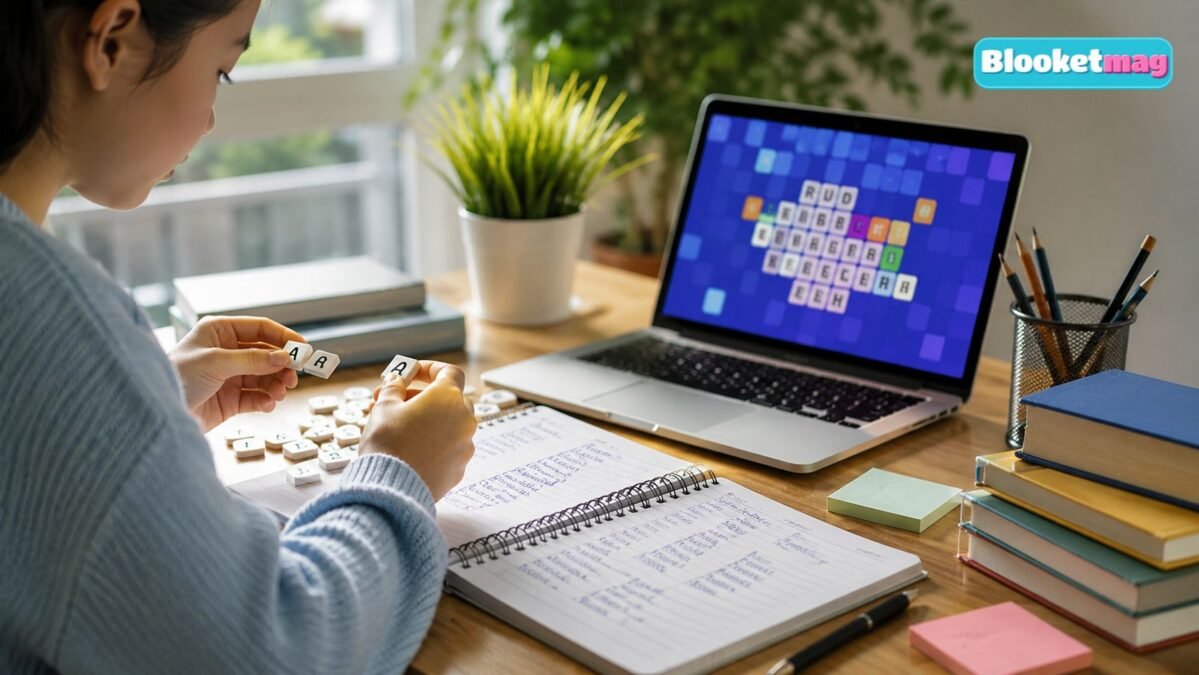
Each round begins with a collection of scrambled letters. You form words by selecting or typing letters without using any letter more often than it appears in the original set.
A word normally needs to meet the game’s minimum length requirement before it is accepted. Every valid entry is added to the word list, while repeated, invalid, or unavailable combinations are rejected.
Finding short words increases your score and fills spaces on the board. The main objective, however, is usually to identify the longest word that uses all the available letters. In the familiar six-letter format, discovering that six-letter word allows you to move forward.
Some editions or platforms may display the game slightly differently, but the central challenge remains the same: rearrange a fixed set of letters and discover as many valid words as possible.
Why Untimed Mode Still Requires Strategy
It is easy to assume that unlimited time removes the difficulty. In reality, it removes only the pressure of the clock. You still need to recognize spelling patterns, remember vocabulary, and avoid becoming mentally stuck on one arrangement.
Without a method, players often repeat the same guesses or stare at the letters without seeing anything new. They may spend several minutes searching for a complicated word while overlooking simple three-letter combinations.
A reliable strategy gives each round a clear structure. Instead of waiting for inspiration, you move through the letters systematically. This reduces repeated guesses and helps reveal words that would otherwise remain hidden.
Begin With Short Words
Starting with three-letter words is one of the most dependable ways to build momentum. Short words are usually easier to recognize and can reveal useful combinations for longer entries.
Look for common patterns such as:
-at, -an, -in, -it, -or, -on, -er, -ed and -ly
For example, a group of letters containing A, R, T, E, and S may produce simple words such as “art,” “rat,” “tar,” “ate,” “ear” and “sea.” Once those combinations become visible, longer possibilities such as “rate,” “tear,” “star” or “rest” may be easier to identify.
Entering short words first also clears mental clutter. You no longer need to keep every easy answer in your head, allowing you to concentrate on the missing longer words.
Twist the Letters Frequently
The twist or shuffle function is not merely decorative. It is one of the game’s most useful problem-solving tools.
When letters remain in the same order for too long, your brain begins treating that arrangement as fixed. You may repeatedly notice the same beginning, ending, or letter pair even though dozens of other arrangements are possible.
Twisting changes the visual pattern. A suffix may suddenly appear at the end, two consonants may sit together, or a familiar word may become obvious.
Use the twist button whenever you have gone through several guesses without finding something new. Do not wait until you feel completely stuck. Frequent rearrangement keeps your attention flexible and prevents one unhelpful pattern from dominating the round.
Search for the Longest Word Early
Although short words are a good starting point, you should begin examining the full letter set early in the round. The longest word is usually the key to progression, so leaving it until the very end can create unnecessary frustration.
Study all the letters and ask several questions:
Could they form a common noun?
Is there a familiar verb hidden in them?
Does the set contain a likely prefix or suffix?
Could one letter be part of a plural or past-tense ending?
You do not need to stop entering shorter words while thinking about the full-length answer. Keep the longest word in the back of your mind as you work. A shorter entry often provides the root needed to recognize it.
For instance, finding “rate” might lead you toward “later,” “alert” or another longer arrangement, depending on the letters available.
Break the Letters Into Groups
Trying to process every letter simultaneously can feel overwhelming. A better approach is to divide the set into smaller groups.
Begin by examining pairs of letters that commonly appear together:
CH, SH, TH, ST, TR, PR, CL, BR, EA, OU, AI and IE
Then look for three-letter clusters such as:
ING, TION, TER, PRE, CON, STR and EST
Not every cluster will be useful in every puzzle, but this method gives your mind a starting point. Instead of looking at six unrelated characters, you begin seeing possible word components.
You can also separate vowels from consonants. Count how many vowels are available and consider where they could fit. A set containing only one vowel will behave differently from one containing three or four.
Look for Prefixes and Suffixes
Many English words are built around reusable beginnings and endings. Recognizing these structures can turn a difficult puzzle into a manageable one.
Common prefixes include:
re-, un-, in-, dis-, pre- and over-
Useful suffixes include:
-ed, -er, -es, -ing, -ly, -ness and -ment
In a six-letter puzzle, longer endings such as “-ment” may not appear often, but smaller endings like “-ed,” “-er,” “-es” and “-ly” are highly valuable.
Suppose you discover the word “play.” If the letters also contain E and R, “player” becomes an immediate possibility. Similarly, spotting “read” may lead to “reader” when the required letters are available.
Always confirm that each letter appears in the original set. A valid English word will still be rejected when it uses an extra letter that the puzzle does not provide.
Check Plurals and Verb Forms
After entering a noun, check whether the available letters can create its plural. After entering a verb, consider its past-tense or third-person form.
If “cat” works and an S is available, try “cats.” If “rate” is accepted and a D is present, test “rated.” If “play” appears with an S, “plays” may also be valid.
This habit can produce several answers from one root word. However, avoid assuming that every possible grammatical form will be accepted. The game uses a defined dictionary, and some obscure forms, abbreviations, proper names, or unusual variations may not appear in it.
Treat rejected entries as information rather than failure. They show you which paths are not useful for that round.
Work Through Vowel Patterns
Vowels often reveal the structure of a word. When you are stuck, place the available vowels in different positions and build around them.
For a set with A and E, consider arrangements such as:
A-E, E-A, AE and EA
Then test consonants around those patterns. You may notice familiar shapes such as “rate,” “tear,” “seat,” “late” or “near.”
When the set includes repeated vowels, ask whether they might sit together. Words containing “ee,” “oo” or other repeated vowel patterns can be easy to miss when the letters are separated.
Pronouncing possible combinations quietly can also help. Sometimes your ear recognizes a word pattern before your eyes do.
Pay Attention to Repeated Letters
Repeated letters provide useful clues but also create common mistakes. Players sometimes forget that a word can use a letter twice when the set includes two copies. At other times, they attempt a double-letter word even though only one copy is available.
Count the letters before testing a longer word. If there are two Es, possibilities involving “ee” or two separate E sounds deserve attention. Two consonants may suggest patterns such as “letter,” “little,” “press” or “class,” depending on the full set.
Repeated letters also reduce the number of completely different arrangements. Once you recognize how the repeated character is likely to function, the puzzle may become easier.
Use a Systematic Search Order
A consistent search order prevents random guessing. One effective sequence is:
First, find obvious three-letter words. Next, expand those roots into four-letter words. Then search for plurals, endings, and five-letter combinations. Throughout the process, continue looking for the full-length word.
You can also work alphabetically in your mind. Start by forming words beginning with the first available letter, then move to the next.
For example, if the letters are A, E, R, S, T and T, search for A-words first, followed by E-words, R-words, S-words and T-words. This approach may feel slower at first, but it reduces repetition and improves coverage.
Avoid Repeating Failed Guesses
Entering the same rejected word several times wastes attention and interrupts your rhythm. In untimed mode, there is no reason to rush so quickly that you forget what you already tested.
Pause briefly after a rejection. Notice whether the word was invalid, misspelled, too short, or impossible with the available letters.
If you frequently forget your attempts, divide the round into stages. Spend one stage on short words, another on words with a particular ending, and a final stage on the longest answer. A structured process makes repeated guesses less likely.
Think Beyond the Most Obvious Meaning
Letters often suggest one familiar word so strongly that other possibilities become difficult to see. This is known as mental fixation. You recognize one arrangement and unconsciously keep returning to it.
The best response is to deliberately change your perspective. Twist the letters, begin with a different consonant, or focus on an unusual vowel placement.
You can also ask whether the same letters might form a different part of speech. A set that creates a noun may also produce a verb or adjective. Looking beyond the first obvious interpretation often reveals several additional answers.
Build a Personal Word List
Keep a small record of unfamiliar words accepted by the game. You do not need to memorize every obscure entry immediately. Simply review the list occasionally and note recurring patterns.
A personal word list is especially helpful for short words. Three- and four-letter vocabulary appears repeatedly across anagram games, so learning a modest group of useful words can improve future rounds.
Include the word, its meaning, and one simple example. Understanding the word is more effective than memorizing an unexplained spelling.
Over time, this list becomes a practical vocabulary resource rather than a collection of game answers.
Learn From Missing Words
At the end of a round, examine any answers you failed to find when the game reveals them. This step is more valuable than immediately starting another puzzle.
Ask why each word was missed. Was it unfamiliar? Did it contain an unexpected letter pair? Did you overlook a plural? Were you focused too heavily on one arrangement?
Identifying the reason helps you improve. Simply seeing the answer produces a brief moment of recognition, but analysing the pattern makes it easier to remember during a later round.
Create a Regular Practice Routine
Improvement comes from focused repetition rather than one unusually long session. Playing for fifteen or twenty minutes several times a week can be more useful than playing for hours and becoming mentally tired.
Set a small goal for each session. You might focus on finding every three-letter word, recognizing suffixes, or solving the full-length word before filling the entire board.
As your confidence grows, add new challenges. Try completing a round with fewer twists, finding the longest word earlier, or reducing the number of repeated guesses.
Even in untimed mode, you can track how naturally and efficiently you solve each puzzle.
Expand Your Vocabulary Away From the Game
Word games become easier when vocabulary learning continues outside the puzzle. Reading books, articles, essays, and well-edited magazines exposes you to words in meaningful contexts.
Crosswords, anagrams, word searches, and spelling exercises can also strengthen pattern recognition. Each activity develops a slightly different skill. Crosswords connect words with meanings, while anagrams train flexible letter arrangement.
When you encounter a new word, pay attention to its root, prefix, and suffix. Understanding its structure makes it easier to recognize when its letters appear in a future puzzle.
Common Mistakes to Avoid
One common mistake is searching only for long words. The full-length answer matters, but short words contribute points and may reveal useful roots.
Another mistake is refusing to twist the letters. A static arrangement encourages tunnel vision and makes familiar combinations harder to notice.
Players also overlook basic grammatical variations. A simple S, D, or R can transform one accepted word into another.
Rushing is another problem, even without a timer. Some players carry timed-mode habits into Text Twist 2 Untimed and submit guesses before checking the letters properly. Slow down enough to avoid spelling errors and impossible combinations.
Finally, do not assume a rejected word is always misspelled. It may be a real word that is not included in the game’s dictionary. Move on and continue searching rather than repeatedly challenging the same entry.
Untimed Versus Timed Mode
Timed mode emphasizes speed, quick recall, and decision-making under pressure. It can be exciting, but it may also cause players to overlook simple answers.
Untimed mode provides space for deeper analysis. You can test patterns, learn new vocabulary, and study why certain combinations work. This makes it especially suitable for beginners and players using the game as a language exercise.
Experienced players can benefit from both. Untimed mode develops accuracy and word knowledge, while timed mode tests how quickly those skills can be applied.
A useful progression is to become comfortable with the puzzle structure in untimed mode before moving into timed rounds.
Benefits of Playing Regularly
Text Twist 2 can encourage vocabulary recall, spelling practice, concentration, and flexible thinking. Searching for anagrams requires you to reorganize the same information repeatedly, which keeps the mind actively engaged.
The untimed format also offers a calmer experience than many fast-paced games. You can play at your own speed without feeling punished for taking a thoughtful pause.
The game should not be treated as a replacement for formal language learning, but it can be an enjoyable supplement. It gives players a practical reason to remember word forms and notice how English words are constructed.
H1: Why Classroom 15x Is Gaining Attention Among Students
Frequently Asked Questions
1. What is Text Twist 2 Untimed?
Text Twist 2 Untimed is a word puzzle mode where you can solve letter-based challenges without a countdown timer. It lets you focus on finding as many valid words as possible while improving your vocabulary at your own pace.
2. Is Text Twist 2 Untimed good for beginners?
Yes. Untimed mode is ideal for beginners because there is no time pressure. New players can learn the game mechanics, practice spelling, and develop word recognition skills before trying faster game modes.
3. What is the best strategy for Text Twist 2 Untimed?
A good strategy is to start with short words, use the twist button often, look for common prefixes and suffixes, and always search for the longest possible word while filling in smaller words along the way.
4. Does playing Text Twist 2 Untimed improve vocabulary?
Yes. Regular play helps you discover new words, recognize common letter patterns, improve spelling, and strengthen your overall English vocabulary through repeated practice.
5. How can I find longer words more easily in Text Twist 2 Untimed?
Try rearranging the letters frequently, identify common word endings, build from shorter words, and pay close attention to vowel placement. With consistent practice, spotting longer words becomes much easier.
Final Thoughts
The best way to improve at Text Twist 2 Untimed is to combine patience with a repeatable solving method. Begin with short words, twist the letters regularly, examine common prefixes and suffixes, and keep searching for the longest word throughout the round.
Pay attention to plurals, verb endings, repeated letters, vowel patterns, and familiar letter clusters. When you miss a word, study its structure instead of treating it as a simple mistake.
Untimed mode gives you the freedom to think carefully, but progress still depends on active practice. With regular play and a growing vocabulary, difficult letter sets become less intimidating and hidden words become easier to recognize.
The goal is not merely to finish each puzzle. It is to develop a sharper eye for language, enjoy the process of discovery, and become more confident with every round.